


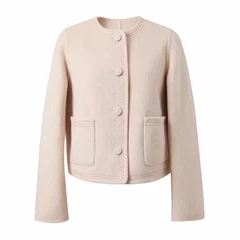
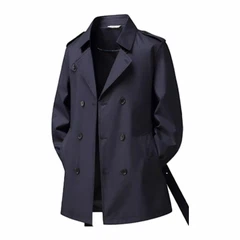

The core material of wool coats is animal hair fiber, with wool being the most common choice. Wool comes from sheep, and its fiber surface is covered with a scaly structure that traps air to form an insulating layer, while also possessing natural elasticity and wrinkle resistance. High-quality wool coats typically use Australian or Merino wool with a fineness of 18-25 microns and a fiber length exceeding 6 centimeters to ensure the fabric is soft and durable.
Cashmere is a more upscale option. It comes from the inner layer of cashmere goats, with a diameter of only 13-15 microns, making it finer and softer than wool. Its warmth is eight times that of wool, but its production is extremely limited (less than 1% of global annual wool production). Therefore, cashmere coats typically cost over a thousand yuan, with some luxury brands reaching tens of thousands of yuan.
To reduce costs and improve practicality, blended fabrics have become the mainstream. Common formulas include wool + polyester (e.g., 80% wool + 20% polyester), wool + acrylic (simulating the feel of cashmere), or wool + nylon (enhancing abrasion resistance). These blended fabrics retain the texture of wool while solving the problems of shrinkage and moth damage associated with pure wool. Prices typically range from 500 to 2000 yuan.
Synthetic fiber imitation wool fabrics, on the other hand, are made entirely of chemical fibers, such as polyester, acrylic, or viscose, and use special processes to simulate the appearance and feel of wool. Their advantages include low price (200-800 yuan), strong wrinkle resistance, and easy care. However, their warmth and breathability are inferior to natural materials, and they are mostly used in fast fashion brands or entry-level products.
